

Air movers are often overlooked, but they play a key role in speeding up drying, improving air circulation, and managing moisture problems. Whether you’re a professional, contractor, or homeowner looking for practical solutions to moisture and airflow challenges, here’s why an air mover might be the tool you’ve been missing.
What Is an Air Mover?
An air mover is a high-velocity drying fan designed to move large volumes of air across wet surfaces. Unlike standard household fans that simply circulate air, air movers deliver focused, directional airflow along floors, walls, carpets, and other moisture-affected areas.
They are commonly used in:
• Water damage restoration
• Construction and renovation projects
• Carpet and floor drying
• Basements, crawl spaces, and garages
The purpose of an air mover goes beyond basic ventilation — it’s designed to accelerate evaporation and speed up the drying process.
Types of Air Movers
Air movers come in several designs to suit different drying and airflow needs. AlorAir currently offers three types of air movers:
• Axial Air Movers
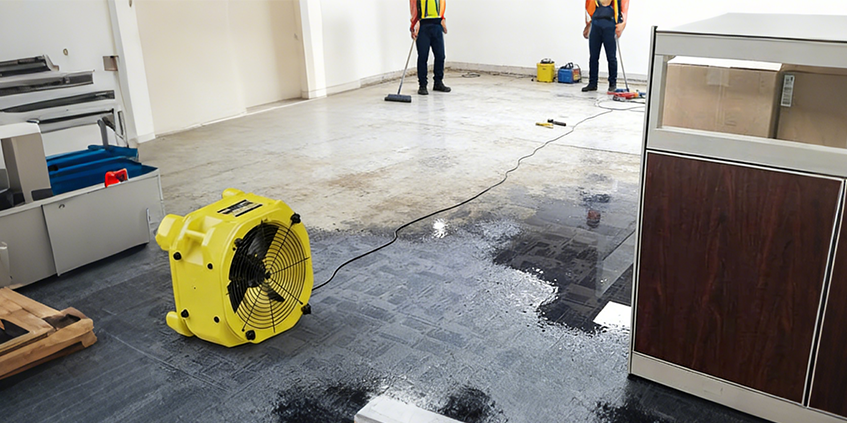
The majority of residential fans and many industrial and water damage restoration fans use an axial blade configuration — meaning the blades are aligned with the direction of airflow. This includes models such as the AlorAir Zeus Extreme Axial Air Mover.
Axial fans are designed to move a consistent volume of air at high airflow rates while operating with lower static pressure compared to centrifugal fans. As a result, they are widely used across various applications and are particularly effective for smaller-scale water damage restoration projects.
• Centrifugal/Snail Blower Fans
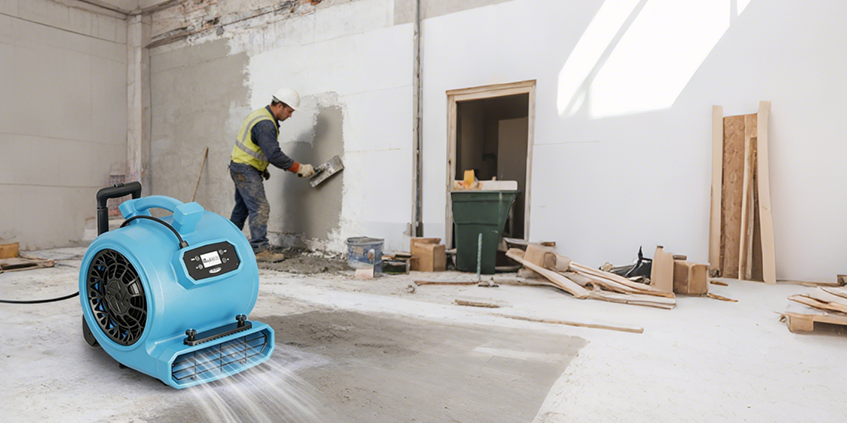
In contrast to an axial configuration, centrifugal fans feature blades that are positioned perpendicular to the direction of airflow. This design allows them to generate higher static pressure than axial fans, making them well-suited for ducted drying applications and larger water damage restoration projects.
Like axial fans, centrifugal (snail blower) air movers are constant-volume machines, delivering consistent airflow velocity relative to air volume. They are especially efficient in ducted setups, where air needs to be moved out of enclosed spaces to achieve thorough and effective drying.
• Low Profile Air Movers
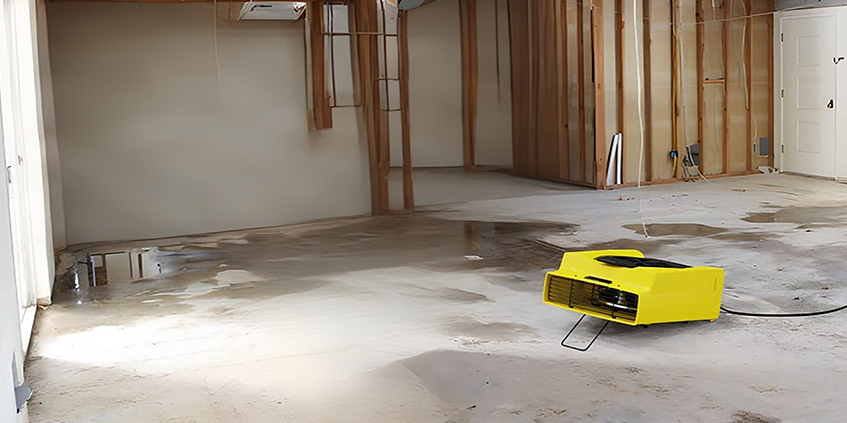
Low-profile, or thrust, air movers deliver high-velocity airflow in a compact design, making them ideal for remediation projects involving tight or hard-to-reach spaces. These construction fans—also known as utility blowers—are typically about half the size of centrifugal air movers and are designed to create a wide, even airflow path. Their low-profile build allows fast-moving air to flow underneath carpets, rugs, and raised cabinets, helping speed up the drying process.
Most models offer multiple operating positions, thanks to a built-in support stand that allows airflow to be angled as needed for drying lower wall areas, stairways, and even ceilings. Units such as the AlorAir Zeus 900 air mover are easy to stack both horizontally and vertically for transport and storage, and many models support daisy-chaining, making them efficient solutions for drying larger areas.
When Do You Need an Air Mover?
You may want to consider using an air mover if you’re dealing with any of the following situations:
• Water leaks or minor flooding
After plumbing issues, appliance leaks, or heavy rain
• Wet floors or carpets
Especially after cleaning or accidental spills
• Basements or crawl spaces with poor airflow
Where moisture tends to linger
• Renovation or construction projects
To dry paint, drywall, or flooring more efficiently
• Mold prevention after moisture exposure
Faster drying helps reduce the risk of mold growth
If moisture goes beyond the surface—or if drying feels slow and uneven—an air mover is often the right tool for the job.
Final Thoughts
An air mover isn’t an everyday household appliance—but when moisture becomes a problem, it’s one of the most effective tools available. Whether you’re dealing with a small leak or managing a renovation project, proper airflow can make all the difference.
💬 Have you ever used an air mover before?
What situation did you need it for—water damage, cleaning, or a DIY project? Feel free to share your experience or questions in the comments.
